Pomegranate Juice Production Line
04/29/2026
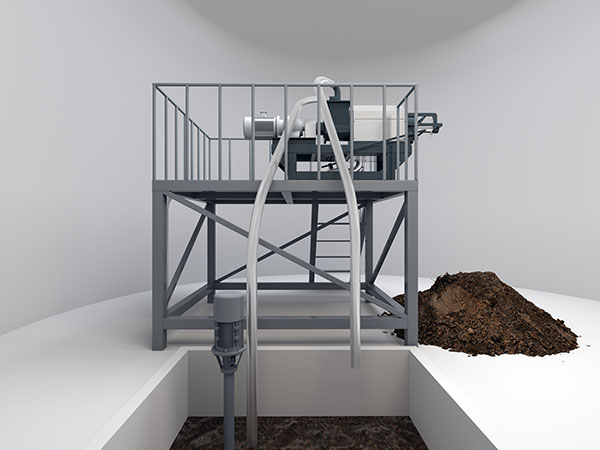
What Is the Best Slurry Separator for Dairy Farms?
06/25/2026Pomegranate Juice Production Line
04/29/2026What Is the Best Slurry Separator for Dairy Farms?
06/25/2026In meat and bone processing industries, different equipment serves different purposes. Choosing the right machine is not only about processing ability --- it directly affects your product texture, production efficiency, and operating cost.
At Furui Machinery, we often receive inquiries from pet food manufacturers and meat/bone processors who are unsure which machine they actually need. In this guide, we clearly explain the differences between a bone crusher, an industrial meat grinder, and a bone/meat paste machine --- and help you quickly identify the right solution for your production.
Bone Crusher, Meat Mincer V.S. Bone Paste Machine
1. Bone Crusher – For Hard Bones with Little or No Meat
A bone crusher is designed for crushing hard, dense bones with little or no meat attached into small granules. Its main purpose is to handle large and hard bones, reduce their volume, and prepare them for further processing in food, pet food, and feed production lines.
Typical Raw Materials:
-
Dry, fresh, or frozen beef bones, pork bones, sheep bones, donkey bones, and fish bones;
-
Various large animal bones;
-
Frozen bone‑in meat and other hard ingredients.
Typical Output: Bone granules (approx. 5-80 mm, adjustable)
2. Industrial Meat Mincer – For Fresh or Frozen Meat
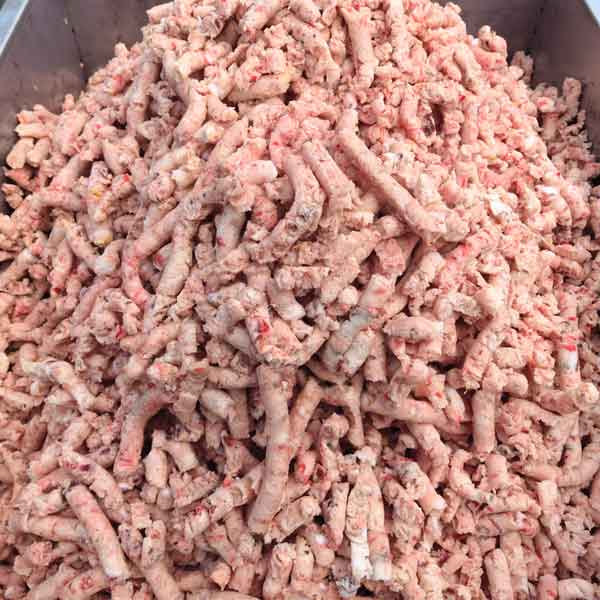
The industrial meat mincer is used to turn fresh or frozen meat and other soft or semi‑hard materials into uniform minced meat or meat particles.
Typical Raw Materials:
- Livestock and poultry meat: fresh pork, beef, mutton, chicken, tempered and frozen meat;
- Skin, fat, trimmings, and by-products;
- Whole poultry (entire chicken, duck) or fish, bone-in meat, ribs, chicken frames, etc.
Typical Output: Minced meat or particles (approx. 3-30 mm depending on plate size)
Best For:
- Meat processing (sausages, meatballs, etc.)
- Pet food (ground or chunk type)
- Pre-processing before fine grinding or emulsifying
3. Bone/Meat Paste Machine – fine grinding into paste
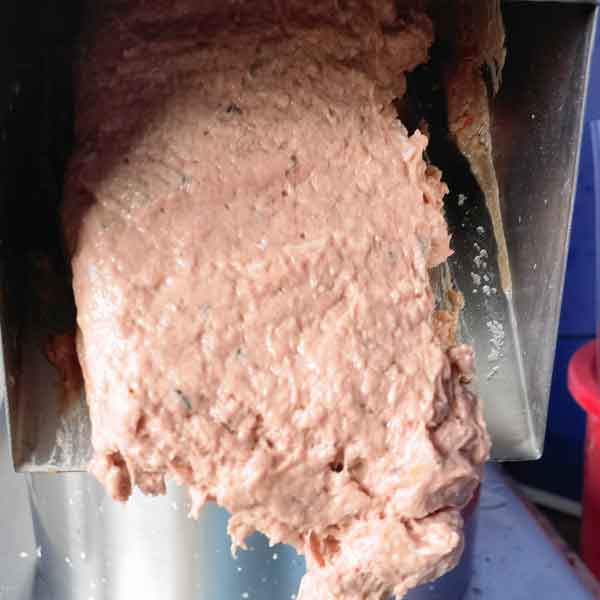
The bone and meat paste machine, based on colloid grinder technology, is used for fine grinding and homogenizing of pre‑processed meat and bone materials. Its core function is to produce smooth paste or slurry.
Typical Raw Materials:
- Small bone granules from a bone crusher;
- Minced meat from an industrial meat grinder;
- Meat trimmings, skin, fish, poultry, and other animal by‑products.
Typical Output: Fine meat paste or bone slurry
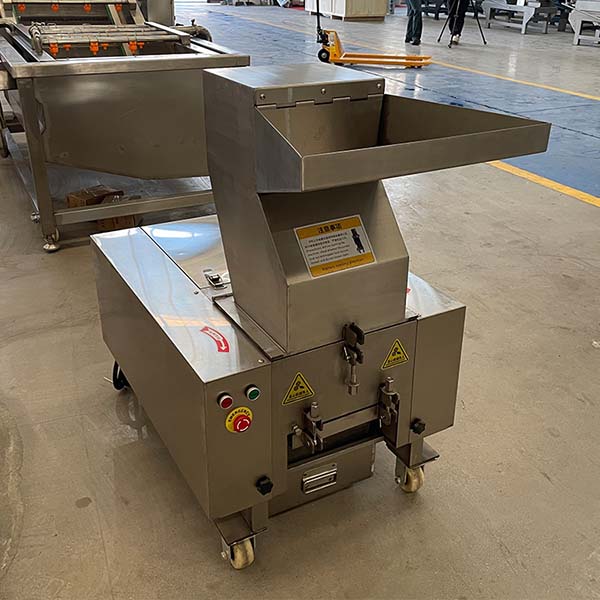
Bone Crusher
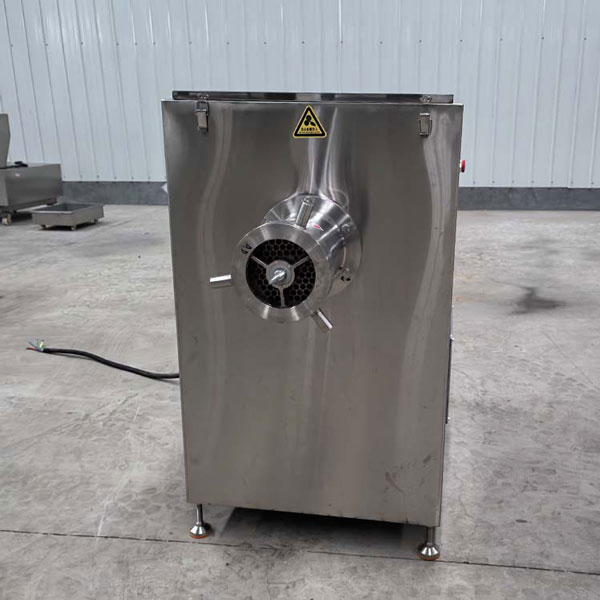
Industrial Meat Mincer
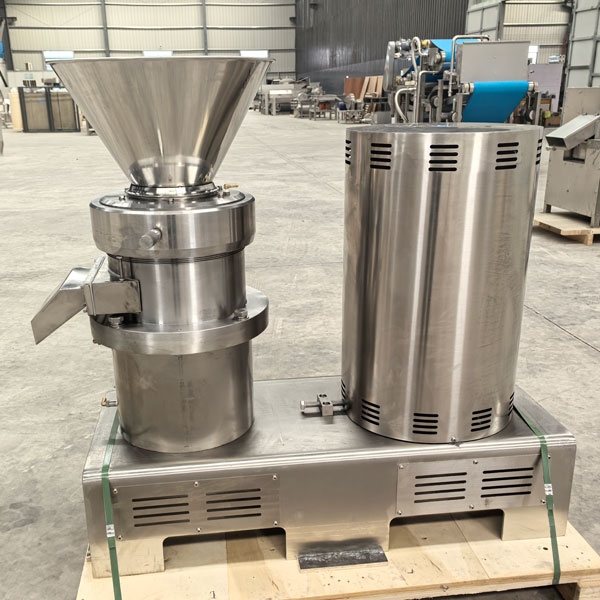
Meat and Bone Paste Machine
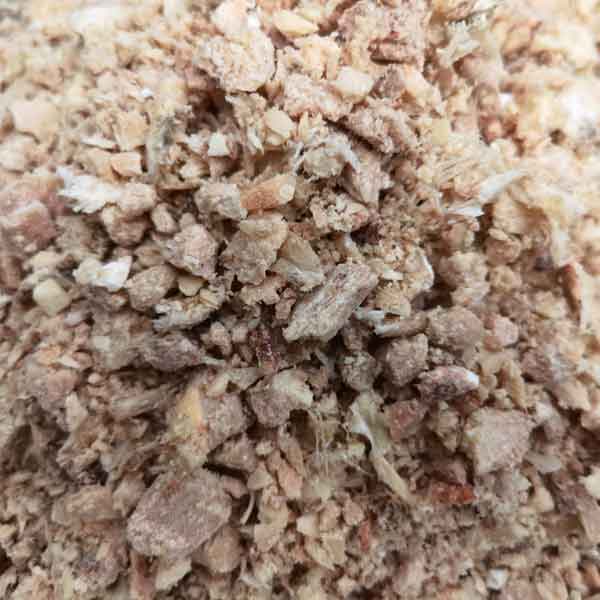
Bone Granules
Meat Mince
Meat Paste
Comparison of End Products
1. Bone Crusher
Produces bone granules or crushed bone pieces with an adjustable size range (around 5-80 mm), mainly for further grinding, or pet food and feed use.
2. Industrial Meat Grinder
Produces minced meat or meat granules with a controlled particle size (around 3-30 mm, depending on the plate), ready for sausages, ham, luncheon meat, meatballs, and pet food.
3. Bone & Meat Paste Machine
Produces very fine, smooth bone or meat paste/slurry with high fineness, suitable for meat or bone paste, pet food, soup base, and more.
Note: Bone crusher and meat grinder are selected based on material composition.
Bone Crusher: Used when the material is mostly bone (hard, dense, low meat content).
Furui Machinery offers two combination solutions: 1. Dry bones: Bone crusher + powder grinder machine for making bone powder. 2. Fresh bones: Bone crusher + colloid grinder for making bone paste.
Meat Grinder: Used when the material is meat-rich (even if bones are included). Our common solution: Industrial meat mincer + colloid grinder for making meat paste.
Structural Design and Working Principle
1. Bone Crusher
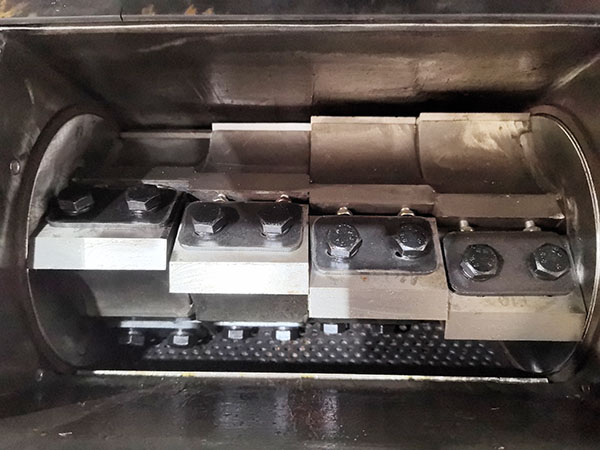
A bone crusher has a heavy‑duty crushing chamber with a strong shaft, blades and a high‑torque drive system. It is designed for impact loading and shock from hard bones and frozen materials.
2. Meat Grinder/Mincer
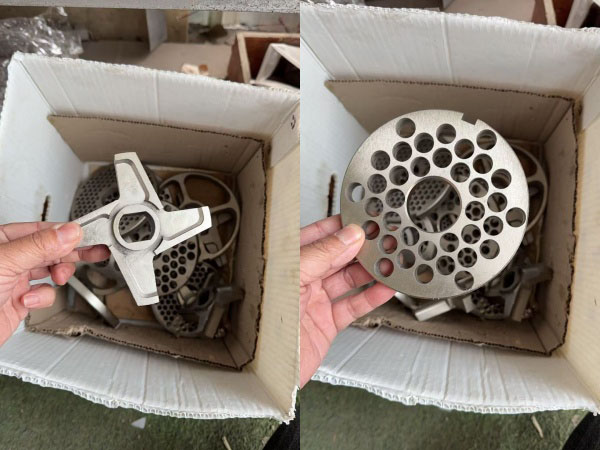
A meat grinder uses a screw‑feeding structure combined with a cutting knife and perforated plate. The screw pushes the meat forward, and the knife cuts it against the plate holes to form uniform meat particles.
3. Bone/Meat Paste Machine
A bone/meat paste machine is built on a rotor‑stator colloid mill. The material passes through a very small gap between the rotor and stator. At high speed, strong shear force, friction, and impact break the material into a fine paste. The grinding gap can be adjusted to control fineness.
Blades of Bone Crusher
Blades and Hole Plates
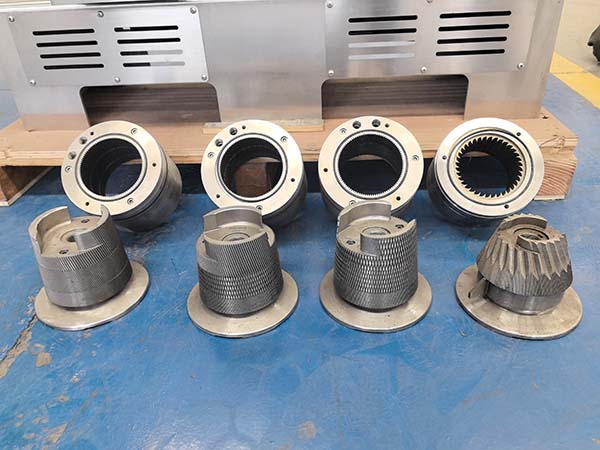
Stators and Rotors
How to Choose Right Bone/Meat Processing Equipment?
Based on our experience with our customers, here are some tips:
1. Start From Your Raw Materials
Ask yourself: what will you mainly feed into the machine?
- If you mainly handle fresh or frozen large and hard animal bones with little or no meat, you need a bone crusher as the first step.
- If your main materials are frozen meat blocks, bone-in meat, fat, skin, and soft tissues for meat products, whole fish, or chicken, an industrial meat grinder is the basic choice.
- If you need to turn small bone granules and minced meat into smooth paste, a bone/meat paste machine is required.
Note: In some real projects, clients may combine two or three machines in a production line.
2. Your Desired End Product
Different end products require different levels of size reduction and texture:
- Coarse bone granules for further grinding, drying → choose a bone crusher.
- Minced meat for sausages, meatballs, dumplings, and burgers → choose a meat grinder with suitable plate sizes.
- Smooth bone or meat paste for pet food slurry, bone paste products, or soup base → choose a bone/meat paste machine, often after pre‑crushing with a bone crusher or meat mincer.
Note: Clarifying whether you need granules, minced meat, or fine paste will help you select the correct machine and avoid over‑ or under‑specification.
3. Consider Scale and Capacity
Next, estimate your required hourly processing capacity. Furui Machinery offers different models of each kind of bone and meat processing equipment. Choosing a machine with appropriate capacity ensures stable production and reduces unnecessary investment and energy consumption. If you have any questions, please feel free to contact us. Just share your main raw materials, desired end products, and target capacity, and we will supply you with a suitable solution according to your specific needs.
Conclusion
Choosing the right bone and meat processing equipment is not just about buying a machine — it's about building an efficient, reliable production process. At Furui Machinery, we don’t just supply equipment. We help you match the right machine based on your raw materials, target product, and production capacity --- especially for pet food applications where consistency and fineness are critical.
If you're not sure which machine fits your needs, simply tell us:
- Your raw materials
- Your desired final product
- Your hourly capacity
Our team will recommend a practical and cost-effective solution tailored to your production.