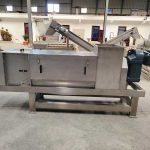
FR-350 Screw Dewatering Machine Shipped to UAE
03/05/2026FR-350 Screw Dewatering Machine Shipped to UAE
03/05/2026Furui Machinery has specialized in screw manure separators since our start. We ship hundreds of units every year to farms and biogas plants worldwide, backed by years of hands-on industry experience. In this FAQ, we answer the most common questions customers ask, so you can confidently select the right slurry separator for your farm or project.
FAQs About Slurry Separator
Here are some frequently asked questions from our clients. If you have specific material to process or need technical support, please contact our team for help!
1What is a manure separator or slurry separator?
A manure separator is a machine that separates livestock slurry into solid and liquid fractions. This makes manure easier to store, transport, reuse, and manage while reducing handling costs and environmental impact.
2How does a screw slurry separator work?
The process is simple but highly effective:
1. Slurry is pumped into the separator.
2. A rotating screw conveys the material forward, gradually increasing pressure.
3. Liquid passes through a screen, while the solid fraction is compressed and discharged at the outlet.
1. Slurry is pumped into the separator.
2. A rotating screw conveys the material forward, gradually increasing pressure.
3. Liquid passes through a screen, while the solid fraction is compressed and discharged at the outlet.
3What types of manure can be processed?
Screw manure separators are used for cow dung, pig manure, chicken (poultry) manure, and biogas slurry. They are not recommended for human waste.
4What is the capacity of manure separator?
Capacity varies depending on model and material. Furui's screw manure separator can process 3-30 m³/hour.
5Can one separator handle different types of manure?
Yes. By adjusting the screen size and operating parameters, the separator can adapt to different manure types and bedding materials. This flexibility is especially useful for farms with mixed livestock.
6What screen sizes work best for different manure types?
Recommended screen sizes:
Pig manure: 0.75 mm
Cow manure: 1.0 mm (0.75 mm optional for finer separation)
Chicken manure: 0.5–0.75 mm
Choosing the right screen improves both efficiency and dryness.
7Does a slurry separator reduce odor?
Yes --- but it won’t eliminate odor completely. Odor mainly comes from wet, compacted manure undergoing anaerobic decomposition. By separating solids and liquids, moisture content is reduced, and solid manure is more porous and less smelly.
8How dry will the solids be?
The liquid content of the dewatered solid is about 50-60%, which is the practical limit of mechanical dewatering. If you want it drier, additional drying equipment is needed.
9What auxiliary equipment is needed?
A complete system usually includes pump, mixer or agitator, pipe, and storage tanks for solids and liquids.
We supply the pump and piping together with the separator.
10How often do wear parts need replacement?
Wear parts depend on usage and material abrasiveness:
Screw shaft: 1–5 years
Screen: 3–12 months
Bearings: 6–24 months
Screw shaft: 1–5 years
Screen: 3–12 months
Bearings: 6–24 months
11Can the separated liquid be discharged directly?
In most cases, no — it should not be discharged directly without treatment.
12Can the separated liquid be reused? How to process the liquid?
Yes. The most effective method is anaerobic digestion. After fermentation, the liquid can be used for flushing livestock facilities or irrigation or fertilization.
13What can the separated solids be used for?
1. Cow manure: Bedding material, compost, or organic fertilizer;
2. Pig manure: Organic fertilizer production;
3. Poultry manure: Fertilizer, compost, or feed additive after treatment.
2. Pig manure: Organic fertilizer production;
3. Poultry manure: Fertilizer, compost, or feed additive after treatment.
14Can manure separators be customized?
Yes. We provide customization based on your project requirements, including:
1. Voltage and electrical standards
2. Machine material (carbon steel or stainless steel)
3. Inlet and outlet design
4. Screen size and configuration
1. Voltage and electrical standards
2. Machine material (carbon steel or stainless steel)
3. Inlet and outlet design
4. Screen size and configuration
15Do I need a separator if I already have a lagoon?
Yes — they serve different purposes.
Lagoon = storage
Separator = volume reduction + resource recovery
Most efficient systems use both together.
Lagoon = storage
Separator = volume reduction + resource recovery
Most efficient systems use both together.
16Does slurry separator clog easily?
Under normal conditions, no.
Clogging may occur when:
Using very fine screens
Slurry contains excessive fibers
This can be managed with proper screen selection and regular flushing.
Clogging may occur when:
Using very fine screens
Slurry contains excessive fibers
This can be managed with proper screen selection and regular flushing.
17What certifications do you have?
Our manure separators are CE certified, ensuring compliance with international safety and quality standards.
18Can the separator be integrated into a biogas plant?
Yes, manure separators can be integrated into biogas plants. The separators are commonly used both before and after digesters to optimize biogas yield, reduce viscosity, and improve digestate handling.
Practical Setup Example:
Farm Pit → Pump + Mixer → Slurry Separator →
├── Liquid (50-60% of volume) → Biogas Digester (20-day retention)
└── Solids (40-50%) → Compost or fertilizer pile
Practical Setup Example:
Farm Pit → Pump + Mixer → Slurry Separator →
├── Liquid (50-60% of volume) → Biogas Digester (20-day retention)
└── Solids (40-50%) → Compost or fertilizer pile
19Can separated solids be used as bedding for cows?
The separated manure solids can be used as bedding material after appropriate treatment or drying.
20What after‑sales service and support do you offer?
1. Detailed installation manuals and videos, operating and maintenance guidance.
2. Technical support for troubleshooting.
3. One‑year warranty for the whole machine.
4. Wear parts supply: screw, screen, motor, pump, bearings, and seals.
We have agents in the Philippines, Germany, and Spain.
2. Technical support for troubleshooting.
3. One‑year warranty for the whole machine.
4. Wear parts supply: screw, screen, motor, pump, bearings, and seals.
We have agents in the Philippines, Germany, and Spain.